1
Tile slows and sheds rain
Concrete or clay tile protects the roof from direct weather, but wind-driven rain can still pass through joints, valleys, broken pieces and transitions.
Concrete tile roof repair
Concrete tile sheds most of the rain. The underlayment and flashing below are what protect your home when water gets through. We open the right area, trace the drainage path, and repair the waterproofing—not just the tile you can see.
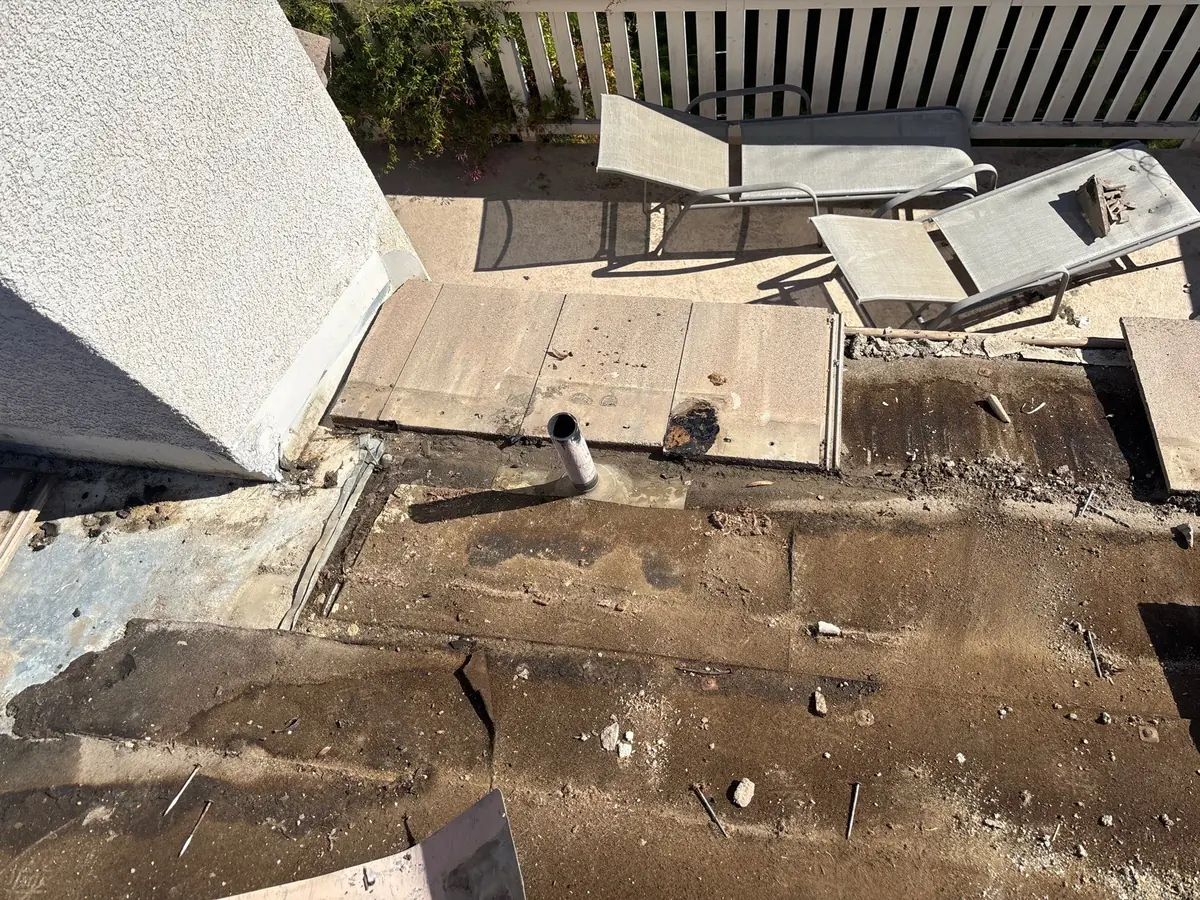
The part most homeowners never see
A repair only makes sense when it addresses how the entire roof assembly moves water.
Concrete or clay tile protects the roof from direct weather, but wind-driven rain can still pass through joints, valleys, broken pieces and transitions.
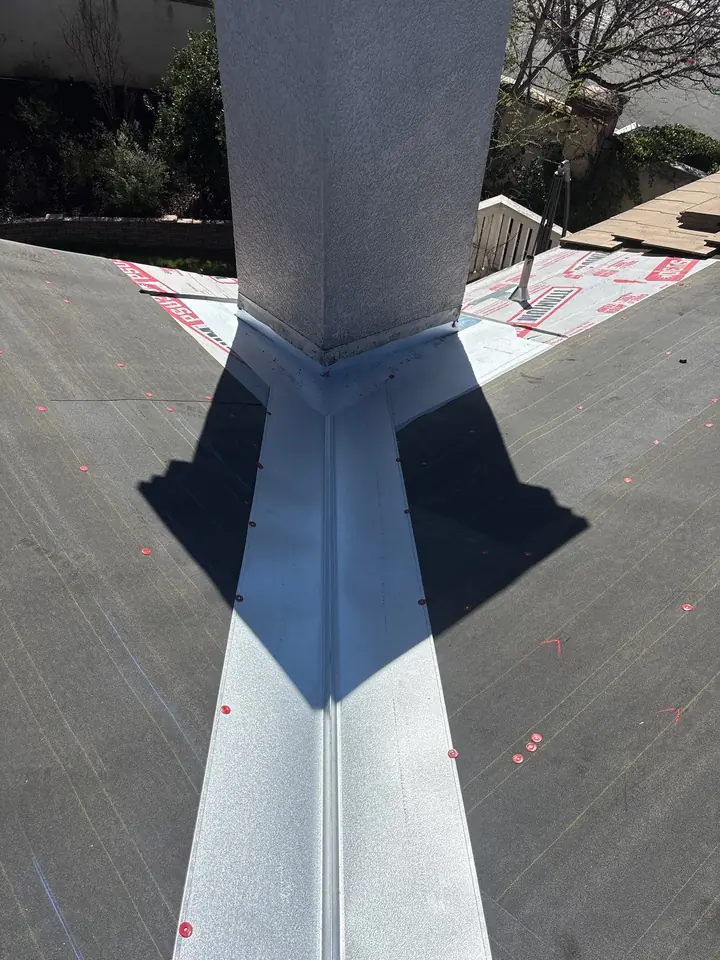
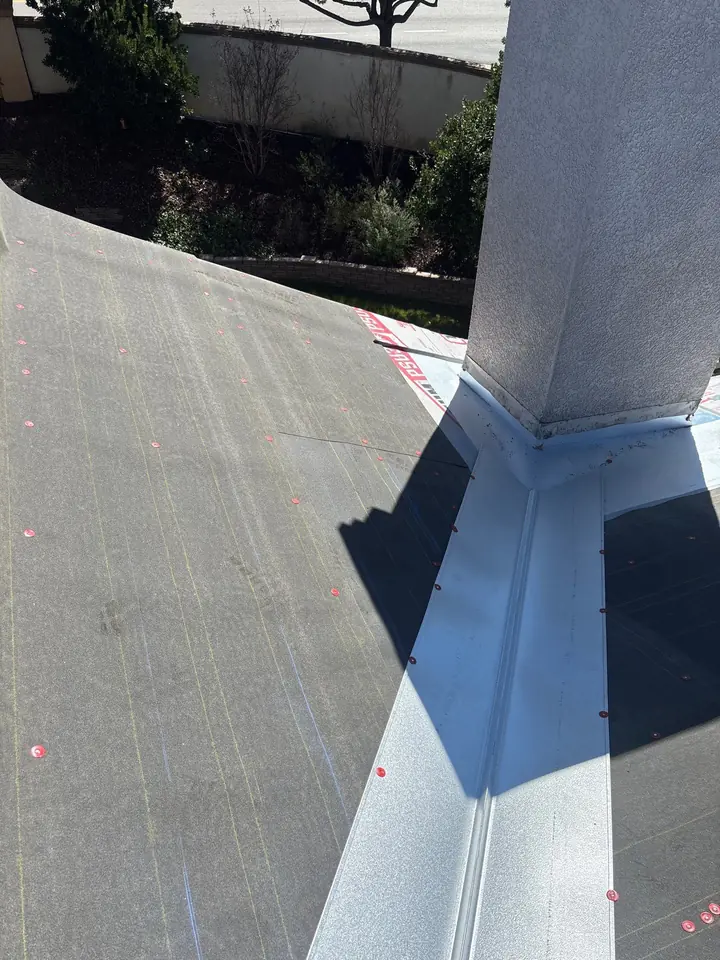
Chimneys, skylights, pipes, walls and valleys interrupt the roof slope. Their metal pans, saddles and counterflashing must guide water back onto the roof.
The paper or synthetic membrane below the tile is the final water-shedding layer. Once it is brittle, torn or worn through, moving a tile does not restore it.
The next storm may simply be shorter, lighter, or coming from a different direction. A damaged underlayment path usually leaks again when the right conditions return.
Where we look first
Age is often the underlying cause, but water usually shows itself at a roof interruption or neglected drainage detail.
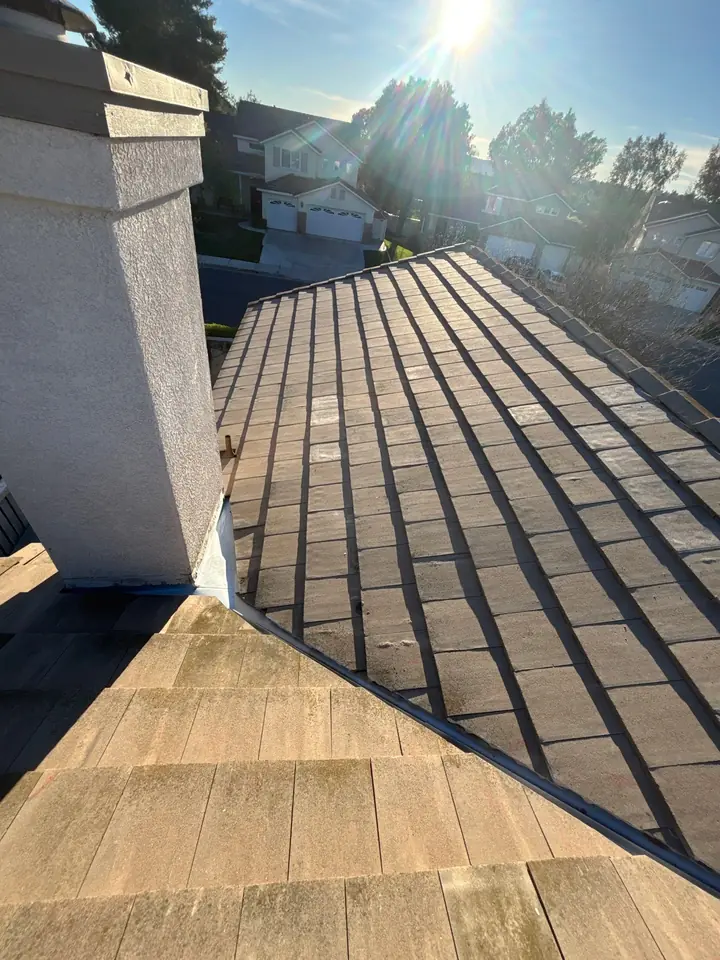
Water hits the wall behind the structure and collects at the saddle, pan, headwall and sidewall flashing. Debris can hold moisture and push water sideways for years.
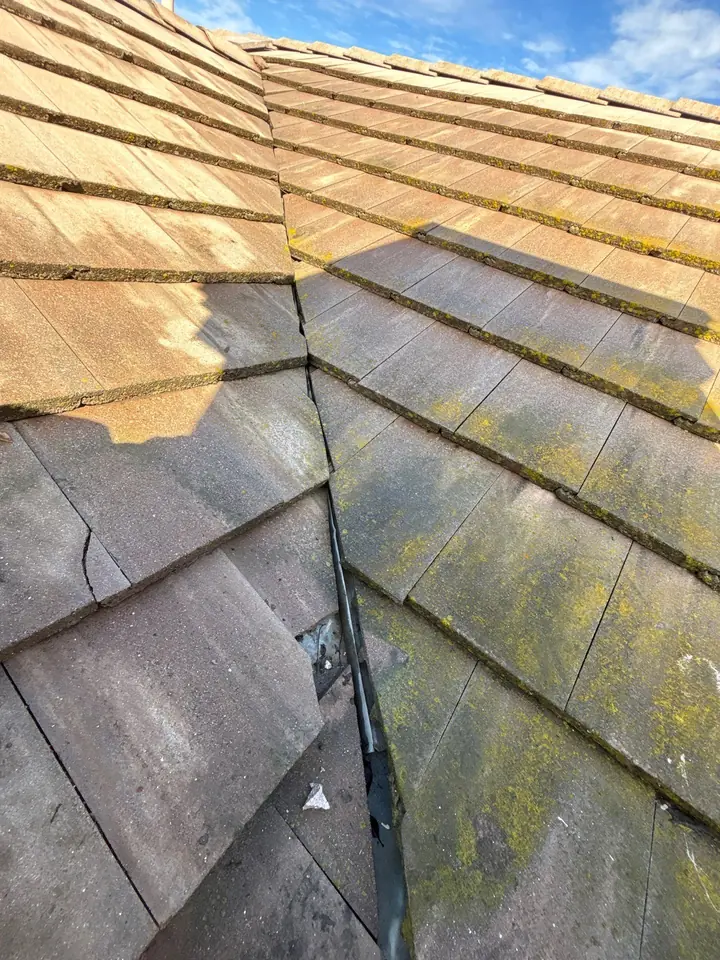
Tile installed too close to the valley metal restricts flow and traps leaves, dirt and moss. A closed valley can force water sideways beneath the tile.
Cracked sealant, loose mortar, poorly detailed pipe flashing, missing weather blocking or absent edge metal can create direct water-entry paths.
Replacing or resetting tile helps limit water reaching the underlayment. It does not repair underlayment that is already ripped, punctured or deteriorated.
Uncleaned valleys, loose tiles and neglected flashing let small conditions compound. Maintenance can reduce exposure, but it cannot reverse existing underlayment damage.
Tile may remain attractive for decades while the material below ages out. The repair decision must be based on the condition under the tile, not the tile appearance alone.
A real chimney repair
These field photos show why the visible tile is only the beginning of the diagnosis.
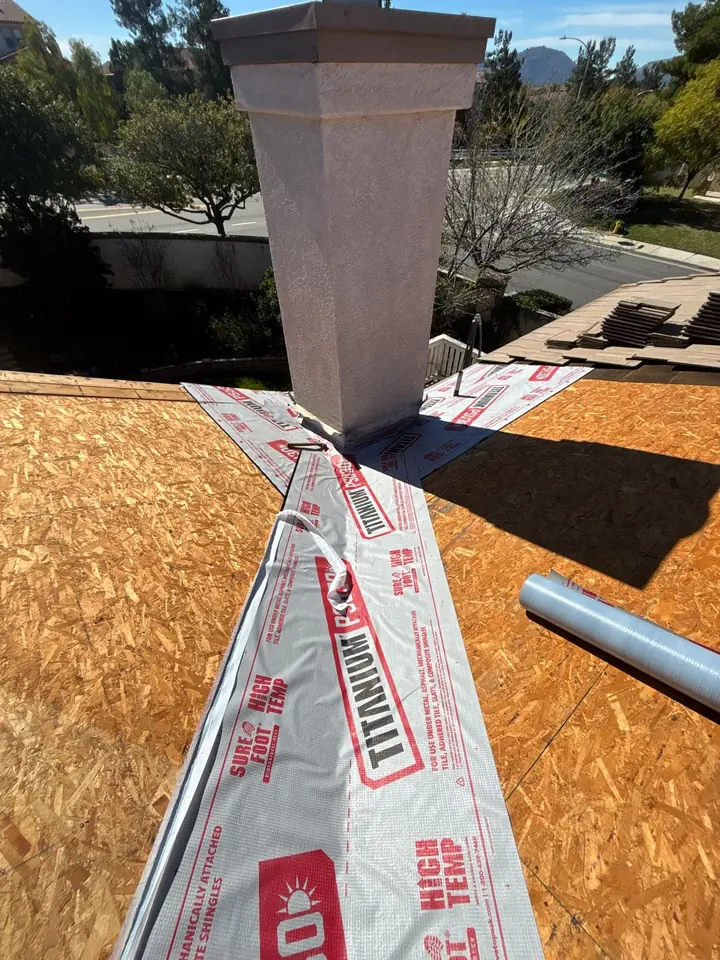
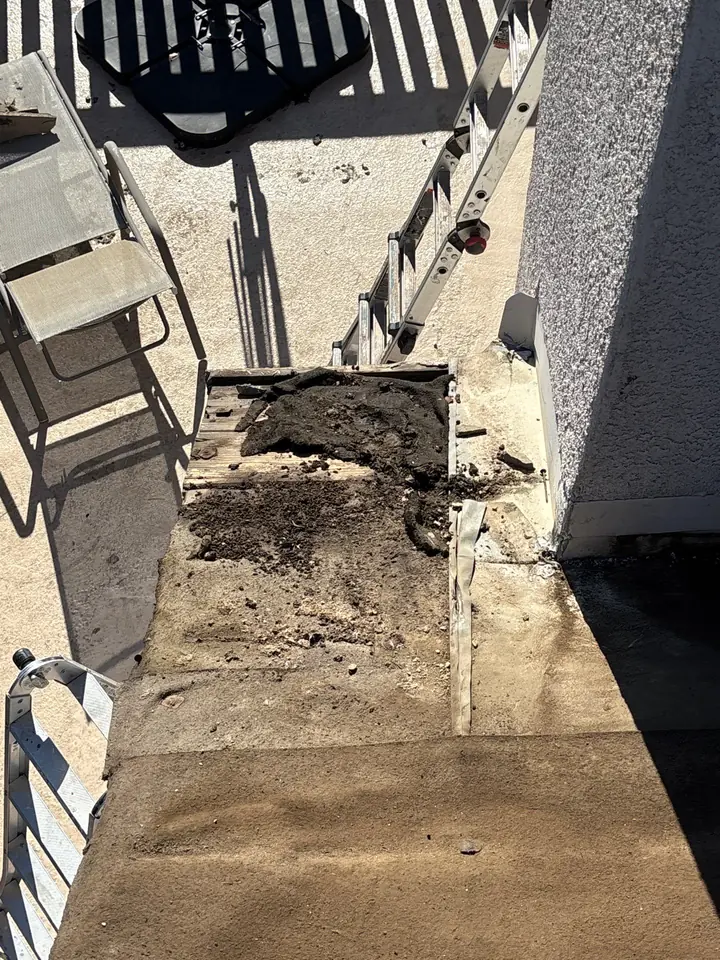
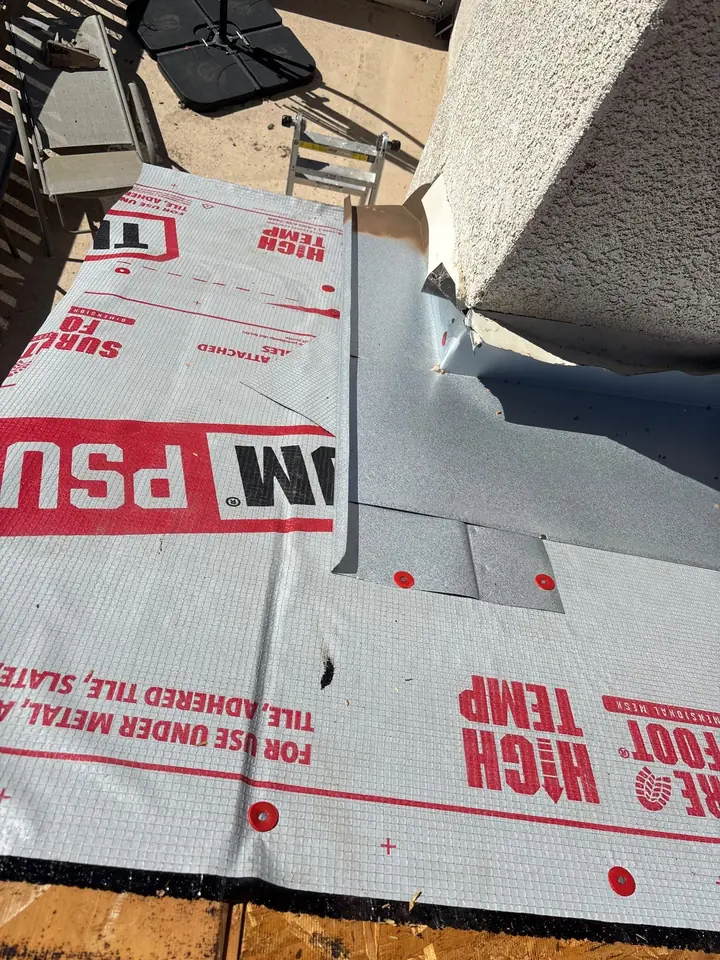
Choose the scope by condition—not by guesswork
A responsible recommendation depends on roof age, how far water traveled, and whether the surrounding underlayment is still serviceable.
Limit active water entry and protect the home while a permanent scope is planned.
Appropriate when the damage is localized and the surrounding underlayment can provide a sound tie-in.
Renew one full slope, facet or connected section when a tiny patch would leave too much aged material in the water path.
Better value when underlayment is brittle across the roof or leaks are appearing in multiple unrelated areas.
Why we avoid tiny spot patches
Flat tile roofs can allow water to move sideways beneath the tile. The interior stain may also appear downhill from the actual opening. Repairing only a two-foot area around the stain can leave the real weakness untouched.
When conditions call for it, we open a meaningful section—often approximately 10 feet wide—and follow the drainage path from the eave upward to sound tie-in points. Depending on the roof, that may mean carrying the repair over a ridge or hip, or tying it into a rake, sidewall or adjacent facet.
There is no maintenance product that makes aged-out underlayment new again. Cleaning valleys, replacing broken tiles and maintaining flashing can reduce exposure and prevent avoidable damage, but existing deterioration remains.
If a tile roof is around 30 years old, we do not automatically recommend a patch. We inspect beyond the immediate leak and explain whether a sectional repair, a full-slope partial lift-and-lay, or a broader reset is the better use of your budget.
What our repair includes
We inspect the roof above and around the interior symptom, including chimney, skylight, valley, wall, pipe and vent details.
Tile is carefully removed far enough to expose the underlayment and determine where sound material begins.
Failed underlayment, decking and compatible flashing components are addressed within the agreed repair scope.
Debris is cleared and valleys, pans, saddles and transition metal are detailed so water can move off the roof.
Serviceable tile is reset and available matching pieces are used where broken tile must be replaced.
Before, progress and completion photos help you see the condition found and the repair completed below the tile.
Straight answers
It may reduce how much rain reaches the underlayment, but it does not repair underlayment that is already torn or deteriorated. If the roof has produced a clear interior leak, the waterproofing below the tile should be evaluated.
A broken tile increases direct exposure, but a serviceable underlayment should still shed incidental water. An interior leak may indicate a puncture, failed flashing or aged underlayment below the broken tile.
They block the natural downslope flow of water. Debris can collect behind them, and their saddles, pans, headwall, sidewall and counterflashing contain multiple transitions that must remain open and correctly layered.
Yes. O’Hagin-style vents, dormer vents and other attic or exhaust openings can admit wind-driven rain under certain conditions. We separate those ventilation-entry issues from a failed roof assembly during diagnosis.
The exact width is condition-dependent, but water can travel sideways beneath flat tile and along compromised underlayment. A broader opening lets us find sound tie-in points and repair the drainage path rather than guessing at one small spot.
When the underlayment is brittle across multiple areas, leaks are recurring in unrelated locations, or each repair must tie into more failing material, a partial or full tile lift-and-lay can be better value than repeated spot repairs.
Yes, scheduling and safe access permitting. Emergency work may stabilize the immediate leak first, followed by a permanent repair once the roof is dry enough to open and rebuild correctly.
Local tile roof specialists
Tile roof leak inspections and repairs in Escondido, San Diego, Temecula and surrounding communities.
Share the property address, approximate roof age and what you have noticed. Photos help us understand the tile, flashing and drainage conditions before we contact you.