Profile matters
Flat, low-profile, S, and barrel tiles have different dimensions and interlocks. A tile that looks close may not seat or shed water correctly.
Concrete Tile Roof Repair
We replace individual broken concrete roof tiles by identifying the correct profile, sourcing the closest practical match, checking the area beneath the tile, and installing a complete replacement—not simply gluing broken pieces together.
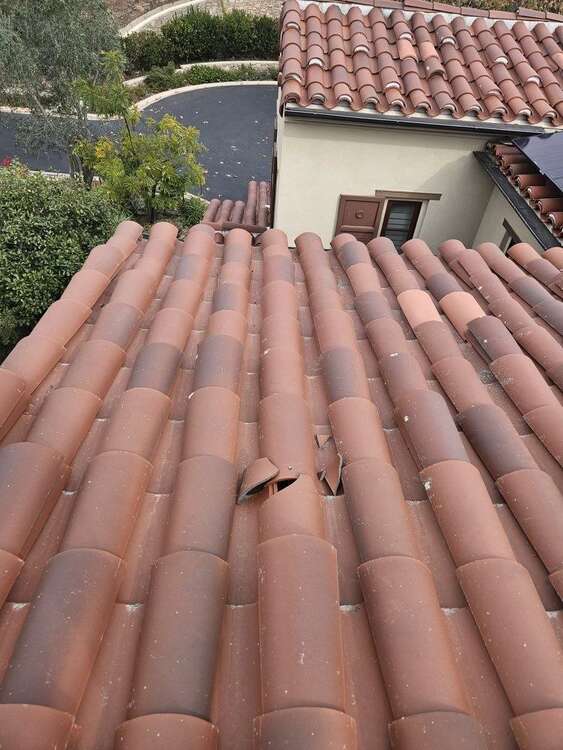
Do not ignore a broken tile
A roof tile is part of a layered system. When it breaks, slips, or is missing, the underlayment and flashing below can be more exposed to water, debris, and UV. A broken tile does not automatically mean there is a leak, but it is worth addressing before a small opening becomes a larger repair.
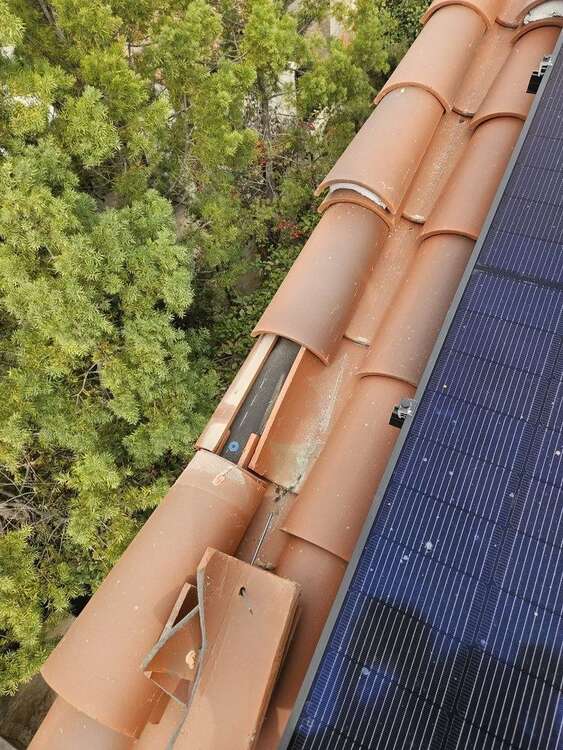
The practical goal
We assess the broken unit, surrounding tiles, and accessible roof layer below. If the issue is isolated and the area beneath is sound, an individual replacement may be the right solution. If we find an underlying problem, we explain it with photos and recommend only the next appropriate repair.
Have a broken tile checkedHow Zenith approaches it
That is not padding the scope. It is what helps ensure the replacement belongs in the roof system and the repair is not simply a visible cover-up.
We examine the tile shape, size, interlock, and color family. Concrete tile profiles are not interchangeable.
We check suppliers and, when necessary, salvage sources for discontinued products. Availability determines whether an exact match is possible.
We remove damaged pieces with tile-roof access in mind and inspect the accessible area below for damage that should be addressed.
We install the full replacement tile with the appropriate compatible securement detail, protect any applicable exposed penetration, clean up debris, and dispose of broken material.
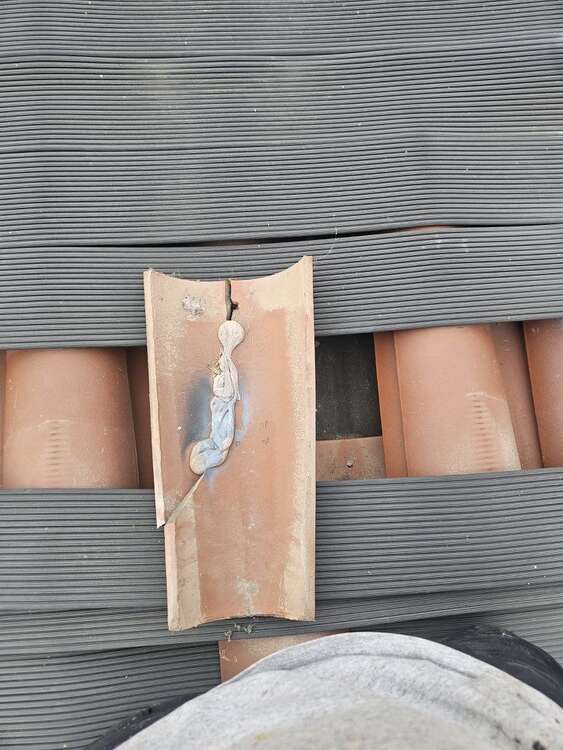
A full tile is better than rejoining fragments
Adhesive can be part of an approved securement detail, but using it to rejoin a broken tile is not the same as replacing the tile. The break can remain a weak point, adhesives can weather and lose adhesion, and a glued surface repair does not confirm that the layer beneath the tile is sound.
Tile roofs near solar equipment deserve particular attention because work and foot traffic can occur around the roof covering. We focus on the roof repair itself: the complete tile, the correct profile, and the condition of the area underneath.
The part homeowners do not see
We want the replacement to fit and look right, but we do not promise a perfect visual match where the manufacturer, profile, or color has been discontinued. Existing tile also changes color over time. Our promise is a careful profile match and the closest practical available color—without forcing you to buy an unnecessary pallet or a collection of samples.
Flat, low-profile, S, and barrel tiles have different dimensions and interlocks. A tile that looks close may not seat or shed water correctly.
Some tiles remain stocked; others require a specialty supplier or salvage-yard search. We tell you what we can source before proceeding.
Safe roof access, sourcing and pickup, careful removal, installation, cleanup, and disposal are part of an honest individual-tile repair.
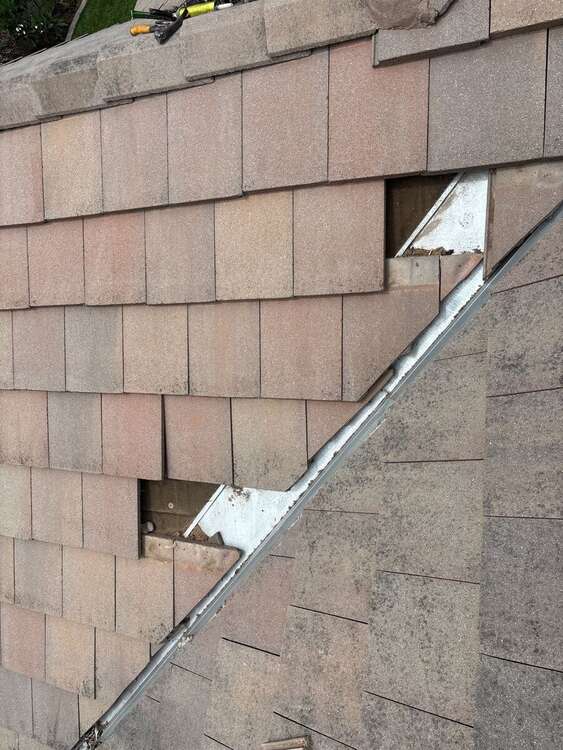
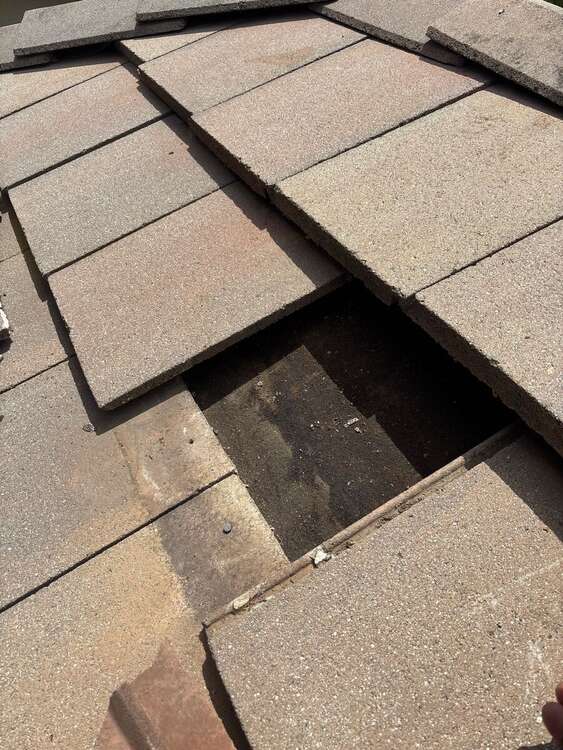
Actual field conditions
These details show why the repair needs to look beyond the visible tile surface.
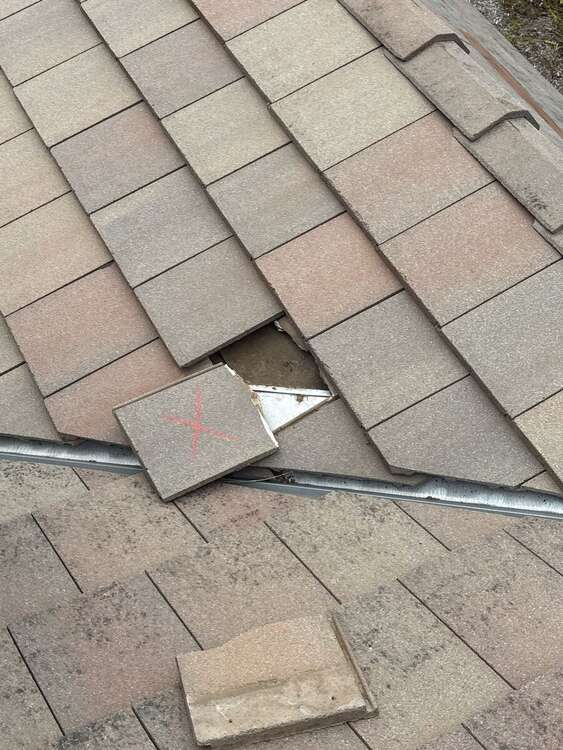
Often appropriate
For an isolated broken or slipped tile when the accessible area below is in serviceable condition.
When needed
When inspection shows an opening or deterioration beneath the damaged tile that should be corrected.
Bigger pattern
When multiple failures or a broader aging condition point to more than an individual-tile fix.
Straight answers
Yes, when the damage is isolated and a compatible tile can be sourced. We also inspect the accessible area beneath it so the repair addresses more than the visible tile.
We work to find the closest practical match. Exact color cannot be guaranteed because tile products may be discontinued and existing tiles weather at different rates.
We do not recommend treating a glued-together broken tile as a final roof repair. It is not a substitute for an intact replacement tile or inspection of the area below it.
A professional repair includes profile identification, sourcing, safe access, careful removal, inspection of the roof area beneath, compatible installation, cleanup, and disposal. Those steps help protect the roof system—not just improve its appearance.
Avoid walking the roof or trying to glue pieces in place. Take clear photos from a safe location and request an inspection, especially if you see a missing tile, a visible opening, or any interior water staining.
Photos help us start identifying the profile and the condition around it. We will confirm the repair path after an on-roof inspection.
*Free estimates exclude real-estate transaction inspections/reports. If you are a buyer, seller, or agent, please see our Real Estate Services.