Penetrations & pitch pockets
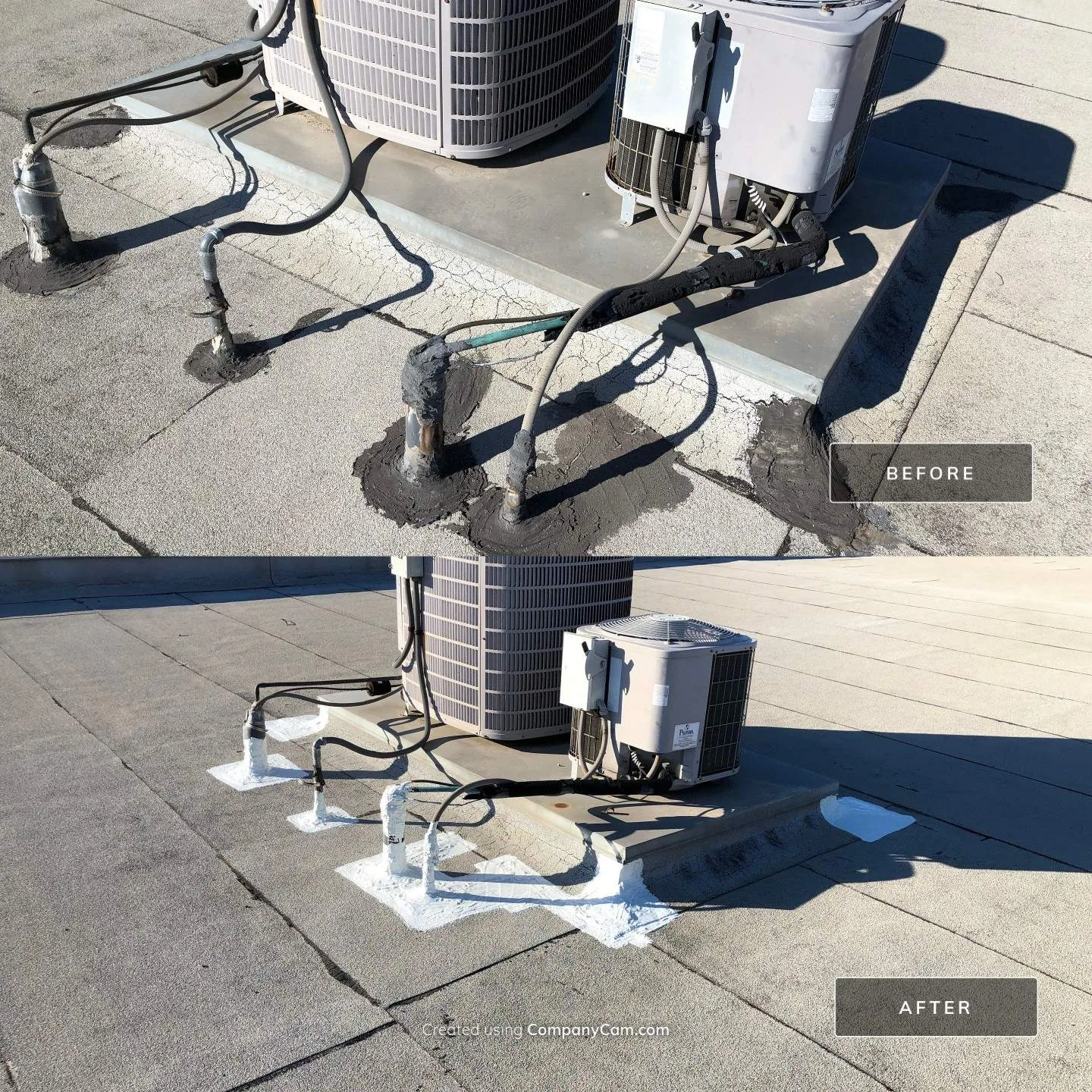
Inspect and detail pipe penetrations, pitch pans or pitch pockets, HVAC supports, equipment curbs and other openings where thermal movement can crack or separate old sealant.
Targeted maintenance for serviceable commercial, tile and limited shingle roofs—focused on vulnerable details, drainage, minor repairs and clear photo documentation.
A tune-up preserves serviceable roof areas; it cannot restore broadly failed underlayment, membrane or shingles.
Perfect for annual upkeep or pre-storm prep across North County San Diego, Temecula Valley, and greater San Diego County.
Commercial roof maintenance
A commercial roof tune-up is targeted preventive maintenance for a low-slope or flat roof that is still serviceable but has vulnerable details. On warehouses, retail buildings, offices and multifamily properties, small openings around drains, pipe penetrations, pitch pockets, equipment curbs and metal transitions can become costly leaks if they are ignored.
Zenith Roofing Services inspects the existing roof system, identifies movement and deterioration, prepares the surfaces and uses compatible, professional-grade detailing materials. This is more than adding caulk: the material, preparation, weather window and existing membrane all affect whether a repair bonds and lasts.
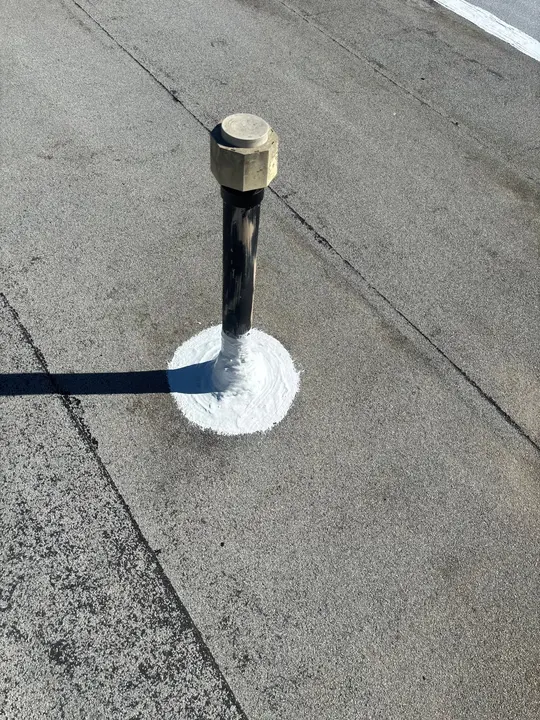
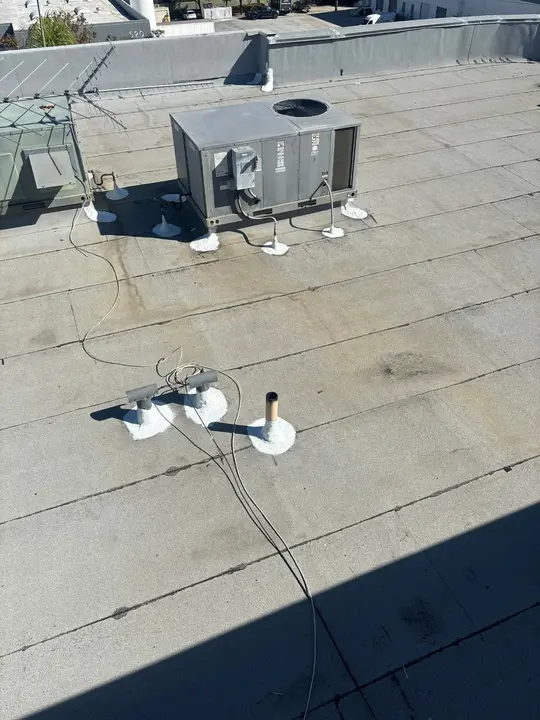
Inspect and detail pipe penetrations, pitch pans or pitch pockets, HVAC supports, equipment curbs and other openings where thermal movement can crack or separate old sealant.
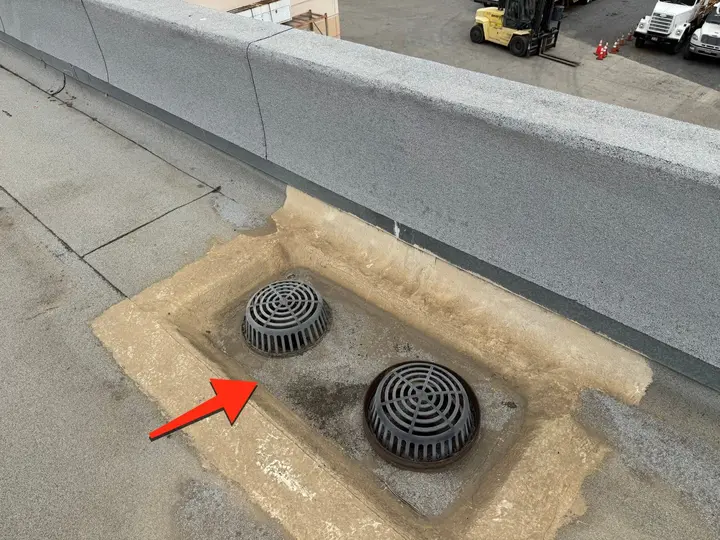
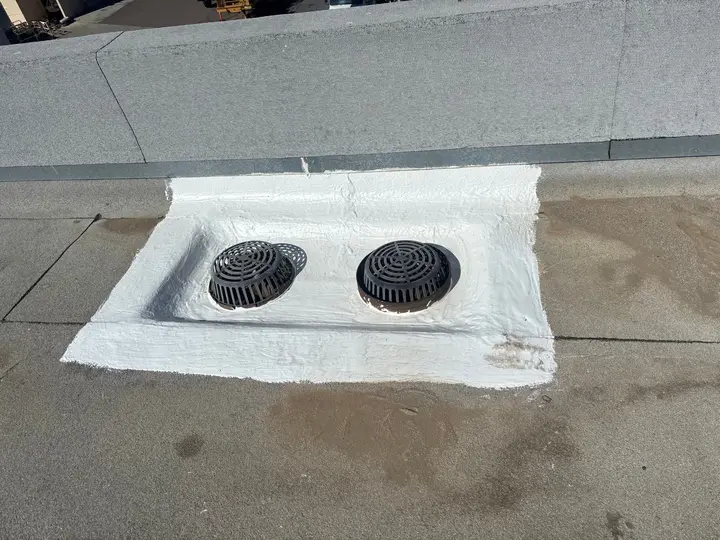
Clear debris, inspect drain bowls and clamping areas, and repair compatible surrounding details so water has a clean path off the roof.
Check counterflashing joints, coping metal, metal transitions and exposed laps for openings, movement or failed sealant.
Identify backed-out fasteners, loose components, split details and open membrane laps that may need correction before they admit water.
Remove loose or failed material and clean, scrape or wire-brush applicable surfaces so the selected sealant or coating can adhere to a sound, dry substrate.
Select a UV- and weather-resistant roof repair material compatible with the existing membrane. Not every mastic, silicone or elastomeric product belongs on every roof.
These photos show actual detail work at a commercial property: existing drain conditions, cleaned and reinforced drain areas, sealed pipe penetrations and completed maintenance around rooftop equipment.
Best when the membrane is generally serviceable and the priority is correcting isolated openings, aging sealant, drainage details and exposed fasteners.
A suitable existing roof may qualify for a silicone restoration system after inspection, moisture evaluation, repairs and adhesion testing. Depending on the approved system, manufacturer coverage may be available in 10-, 15- or 20-year options.
More appropriate when there is widespread membrane failure, saturated insulation, deteriorated decking or structural conditions that maintenance cannot correct.
Granules on a modified-bitumen cap sheet help shield the asphalt surface. When widespread granule loss or weathering appears, early evaluation can preserve more options; a tune-up cannot replace missing roof life or make a roof last forever.
Tile roof maintenance
A tile roof tune-up can preserve a roof that still has serviceable underlayment but needs targeted maintenance. This is especially useful on older concrete-tile roofs with slipped or broken tiles, cracked mortar, exposed underlayment, loose ridge or rake pieces, and aging pipe-flashing details.
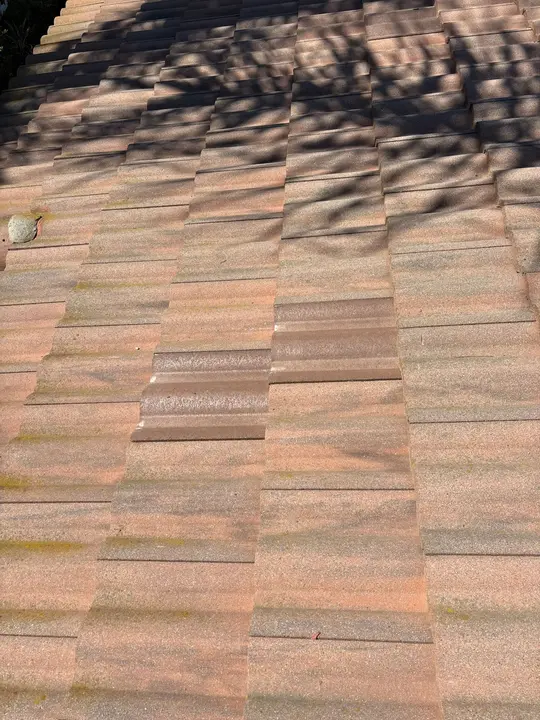
Many tile roofs installed in the 1980s and early 1990s relied heavily on mortar at hips, ridges and transitions. Mortar can crack and separate as the roof moves. The tile sheds most of the water and shields the underlayment from sunlight and weather; when tiles or flashing are missing, the exposed felt can dry, curl and deteriorate.
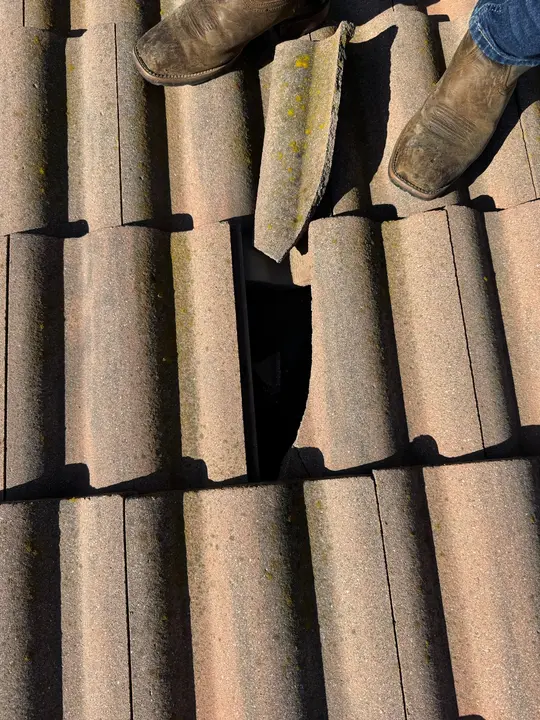
Reposition slipped tiles and replace compatible broken tiles where matching material is available, restoring coverage over vulnerable underlayment.
Remove failed mortar where appropriate and install a suitable aluminum or galvanized secondary flashing detail to keep water moving over the tile assembly.
Secure loose ridge or rake pieces, correct exposed fasteners, and renew compatible mortar or approved weather-blocking details where needed.
Inspect and seal pipe collars and other penetrations, then prepare and paint exposed metal flashing when conditions allow.
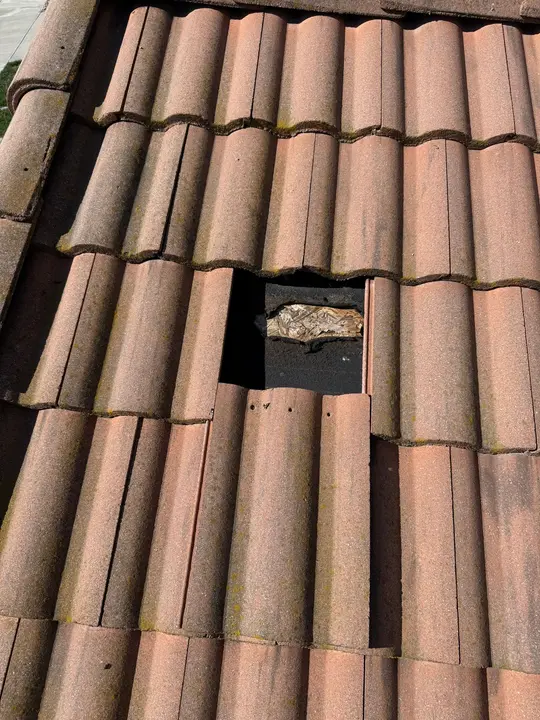
Open a limited tile area and repair a small underlayment defect when the surrounding roof assembly remains serviceable and the damage is truly isolated.
Document what is still sound, what can be maintained, and when broader underlayment work is more responsible than another surface repair.
These are actual field conditions. They show why a tune-up begins with diagnosis instead of simply applying mortar or sealant over every visible opening.
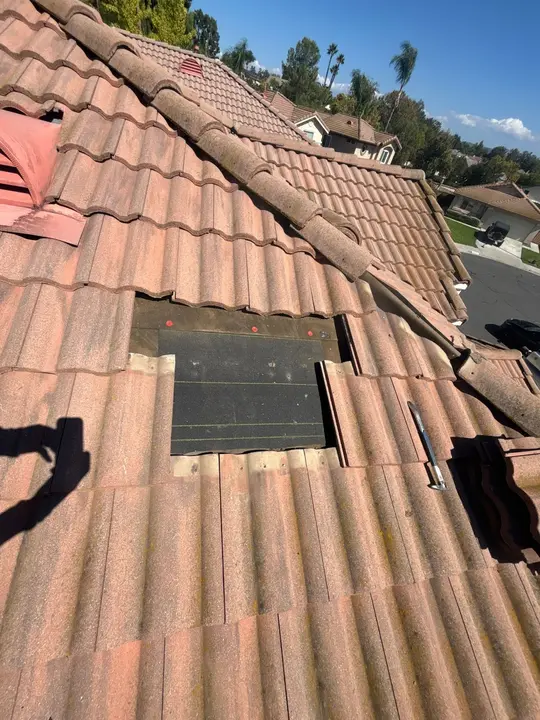
Appropriate for isolated slipped or broken tiles, limited flashing and mortar defects, minor fastener issues, and serviceable surrounding underlayment.
Often the better option when the reusable tile is still sound but aging or failed underlayment affects broad roof areas. Tile is removed, the water-shedding assembly is renewed, and suitable tile is reinstalled.
Needed when widespread deterioration, damaged decking, incompatible materials or the condition of the tile makes reuse impractical.
A tune-up preserves what is still good; it cannot restore underlayment that has already failed across the roof. On long-neglected roofs, plywood can absorb moisture before a ceiling stain becomes obvious. Older tile roofs in Escondido, San Diego, Temecula, Murrieta, Wildomar and nearby communities deserve a condition-based inspection before deciding on maintenance.
Limited shingle maintenance
Shingle tune-ups are less common than tile or commercial maintenance. They are most useful when a shingle roof is generally serviceable and has a limited, repairable condition—such as wind-damaged or missing ridge caps, an isolated damaged shingle, an open penetration detail, or debris blocking a valley or gutter.
Repairs depend heavily on material availability and roof condition. Existing shingles may be too brittle to manipulate safely or so tightly bonded that lifting them causes additional damage. If a compatible shingle or ridge product is no longer made, a visually close substitute may not be an appropriate repair.
Inspect missing or displaced ridge material and install compatible new ridge caps when the surrounding shingles and roof deck can accept a durable repair.
Replace individual damaged shingles only when compatible material is available and the surrounding shingles can be separated without creating wider damage.
Inspect and seal compatible pipe-collar, flashing and exposed fastener details, and paint prepared metal flashing where appropriate.
Remove accessible debris from roof valleys and gutters so water can drain instead of backing up beneath vulnerable shingle edges.
Best for a small, clearly defined condition on an otherwise serviceable roof with repairable surrounding shingles.
We can document visible roof conditions and explain the roofing scope. Property owners remain responsible for claim decisions and should contact their insurer for coverage questions.
Recommended when damage is widespread, shingles are too brittle or bonded to repair, matching products are unavailable, or the remaining roof life is limited.
Some shingle evaluations are requested for real-estate transactions or insurance matters. Those inspections and reports are separate from a standard free replacement estimate; see our Real Estate Roofing Services for transaction-specific work.
We coordinate arrival and protect roof surfaces.
Confirm targets: flashings, debris, minor fixes.
Reseal, reset small items, clean valleys & transitions.
Before/after highlights + recommendations.
Annually for most homes; twice per year if under trees or near the coast.
Yes—see our Roof Leak Repair page for active leak service.
We use tile-safe paths and pads; fragile systems may need extra precautions.
When the membrane and insulation remain serviceable, correcting isolated vulnerable details may extend useful service life and postpone a larger project. Widespread failure, saturated insulation or structural concerns may require more extensive work.
No. The roof must first be evaluated for trapped moisture, adhesion, compatibility and repair needs. A coating is a restoration option for a suitable roof, not a substitute for every replacement.
Dust, loose coating, rust, oxidation and deteriorated material can prevent proper adhesion. Details must be prepared and dry according to the selected product and roof system.
The exact scope depends on inspection, but it may include resetting slipped tiles, replacing compatible broken tiles, correcting limited mortar or flashing defects, sealing pipe collars, securing loose ridge or rake pieces, and repairing a small isolated underlayment area.
Not when deterioration is widespread. A tune-up can preserve serviceable areas and correct isolated defects, but broadly aged or failed underlayment may require a tile lift-and-lay or replacement evaluation.
Sometimes. The existing roof must be flexible enough to work on safely, and a compatible shingle or ridge product must be available. Brittle, tightly bonded or broadly worn shingles may make replacement the more responsible option.
We can inspect and document visible roofing conditions and explain repair or replacement options. Coverage and claim decisions belong to the homeowner and insurance carrier, and no inspection can guarantee claim approval.
Fast scheduling in North County San Diego, greater San Diego, and Temecula Valley.
Share the property address and any visible concerns. Photos help us understand the roof before we contact you.