Identify the existing roof
We determine whether the roof is metal, torch-down, built-up, foam, tar-and-gravel or another compatible low-slope assembly. The surface and condition guide the restoration plan.
Silicone roof restoration
A silicone system can be a smart way to protect a compatible low-slope roof without an unnecessary tear-off. We inspect the roof assembly, prepare the surface, rebuild vulnerable details and coat the system that actually fits the property.
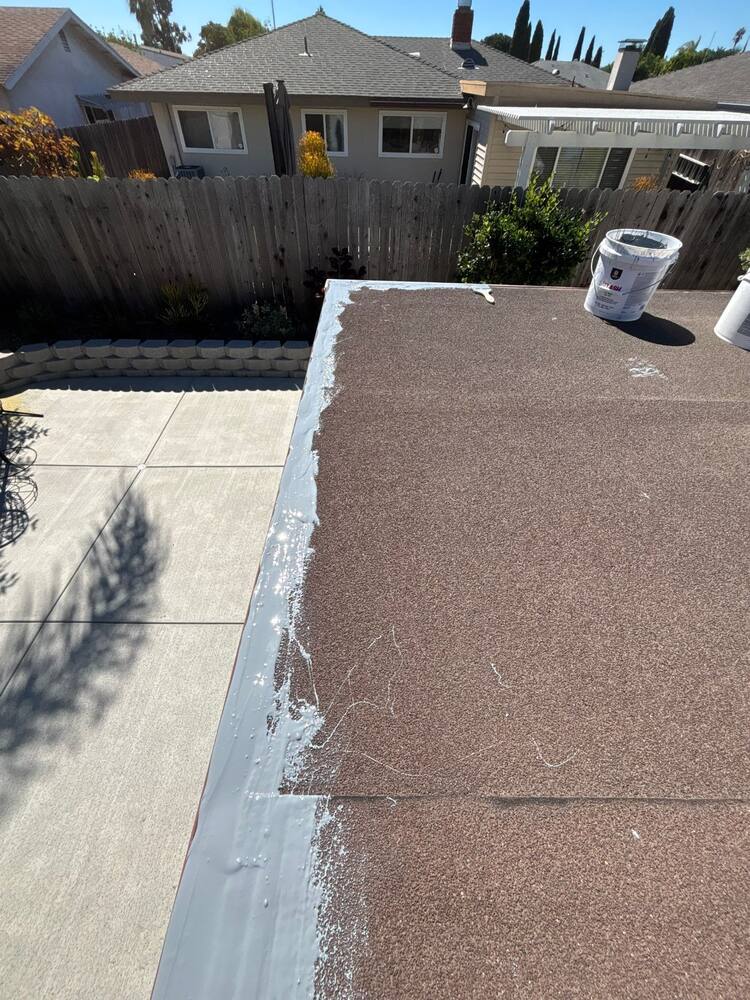
Start with condition
Before we recommend a coating, we look at the roof surface, adhesion, moisture concerns, edges and the details that carry water. The decision begins with what is already on the roof.
We determine whether the roof is metal, torch-down, built-up, foam, tar-and-gravel or another compatible low-slope assembly. The surface and condition guide the restoration plan.
Drip edges, parapets, pipes, scuppers, open laps, corners and penetrations need attention before a coating can perform as intended.
A coating can be a great fit on a dry, sound roof. If the substrate is failing, moisture is widespread or the roof is not compatible, we explain the better path instead.
The Zenith process
The field coating is the visible part of the job. The prep and transition work are what give the system a proper surface to bond to.
We identify lifting areas, holes, failed seams, vulnerable edges and the roof details that need to be corrected before coating.
Pressure washing is preferred when conditions allow because it provides the cleanest surface. Where water and cleanup constraints make that impractical, we use appropriate wire-brush and blower preparation.
We use compatible caulking or silicone mastic at nail holes, edges, scuppers, pipes, corners, open laps and other transition points, then allow the detail work to cure.
Once the roof is ready, we apply the selected silicone coating at the specified coverage rate and complete cleanup of the work area.
A coating system has a build
We discuss the coating build with you instead of treating every roof the same. The right system depends on the roof condition, application requirements and the durability goal for the property.
Talk Through Your OptionsA lighter silicone build can suit the right roof and scope when it meets the selected system requirements.
A thicker silicone application for owners who want a longer-lasting, more substantial restoration where the system is appropriate.
Warranty availability, including 10- and 20-year system options, depends on the manufacturer, roof condition, preparation and installation requirements for the individual project.
Real Zenith field work
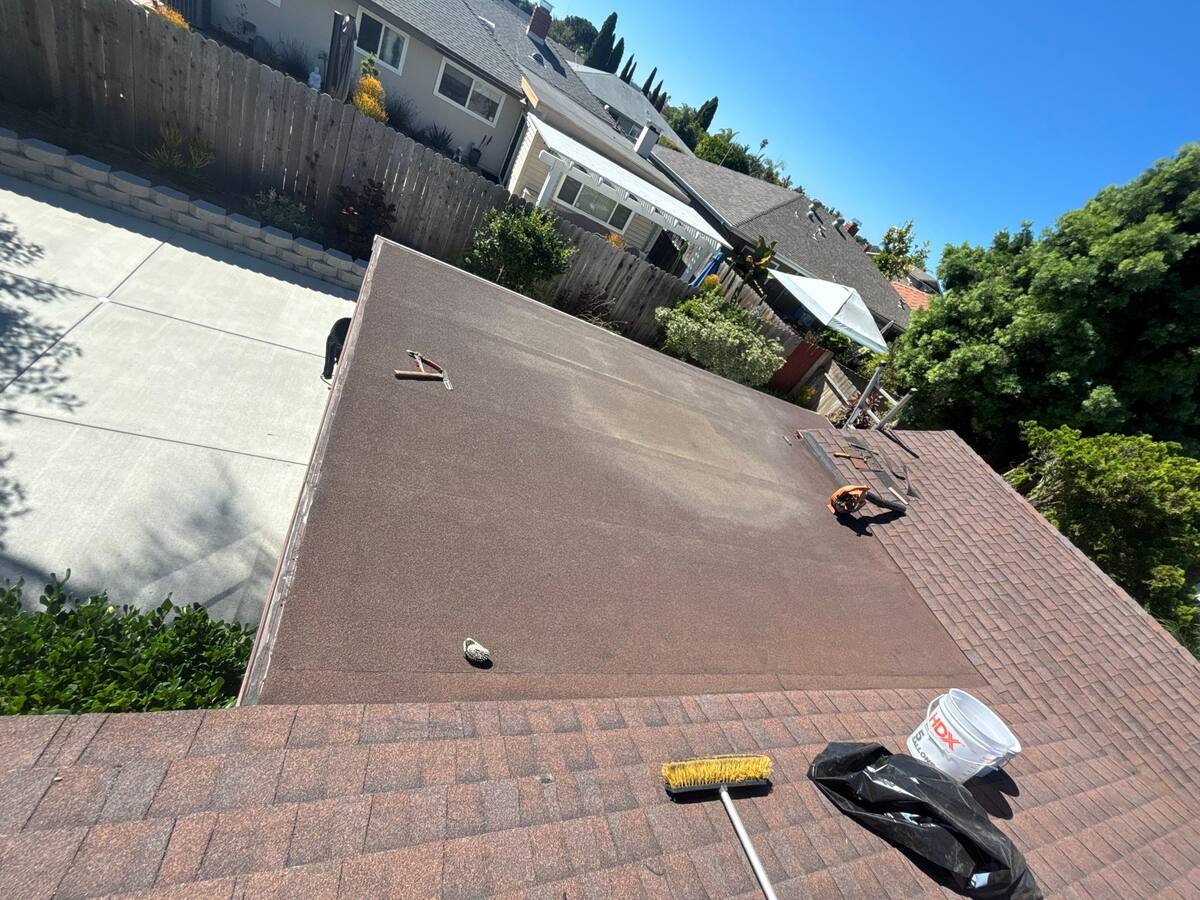
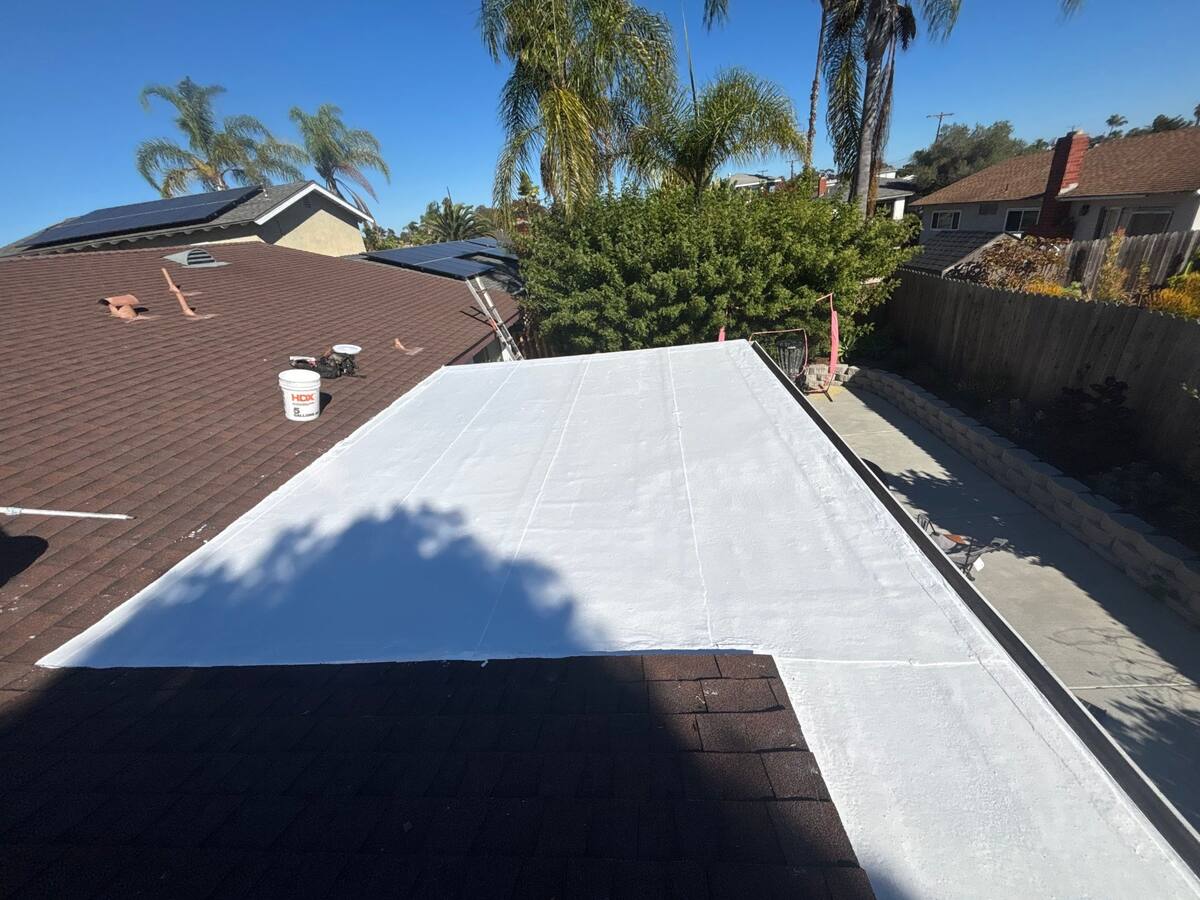
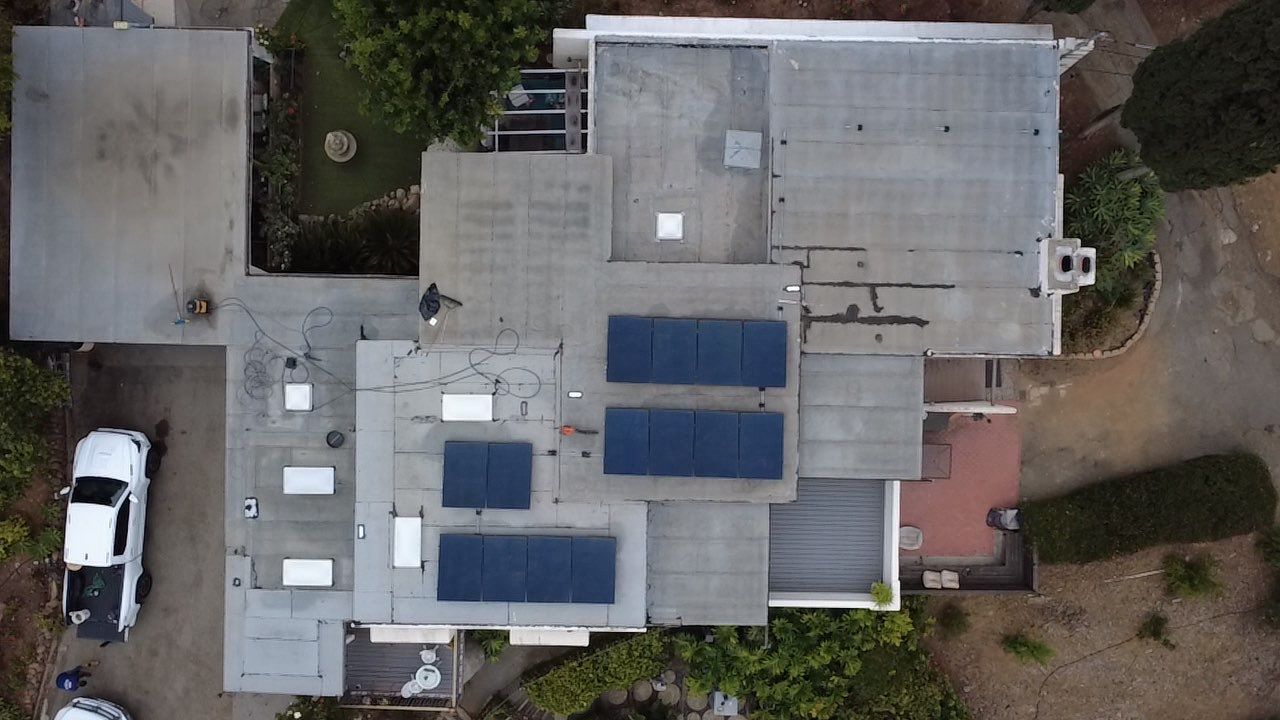
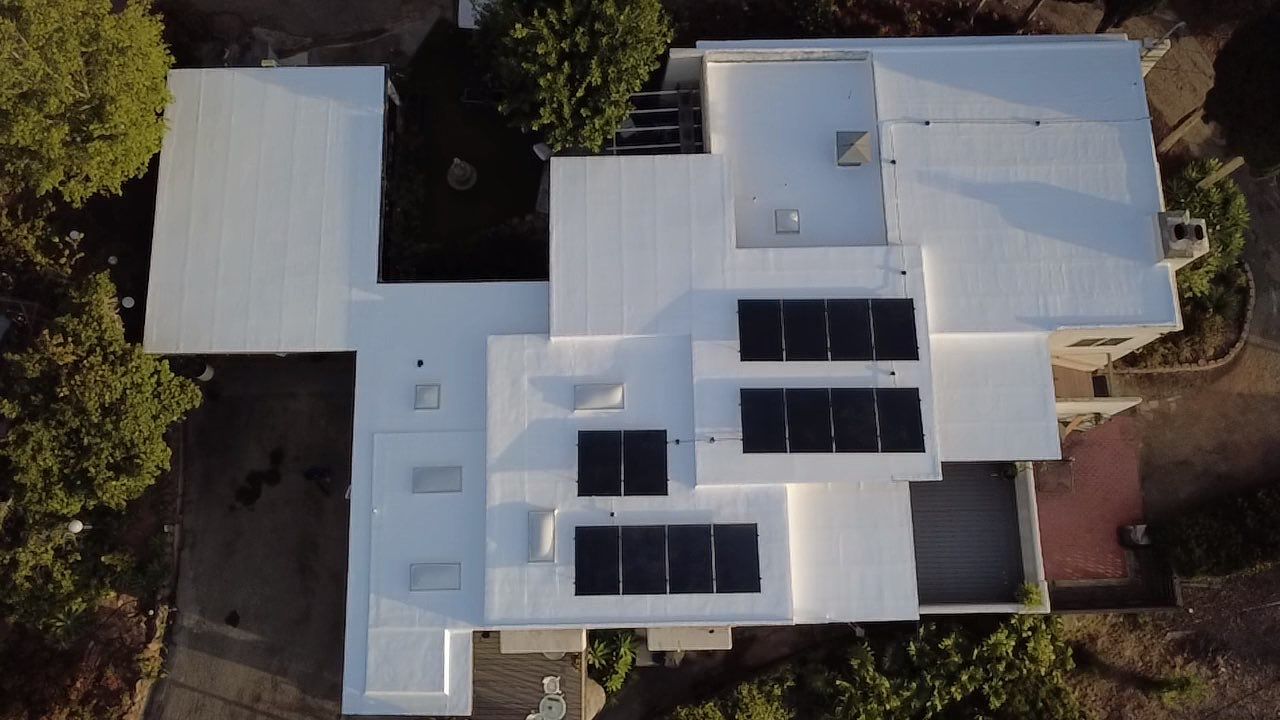
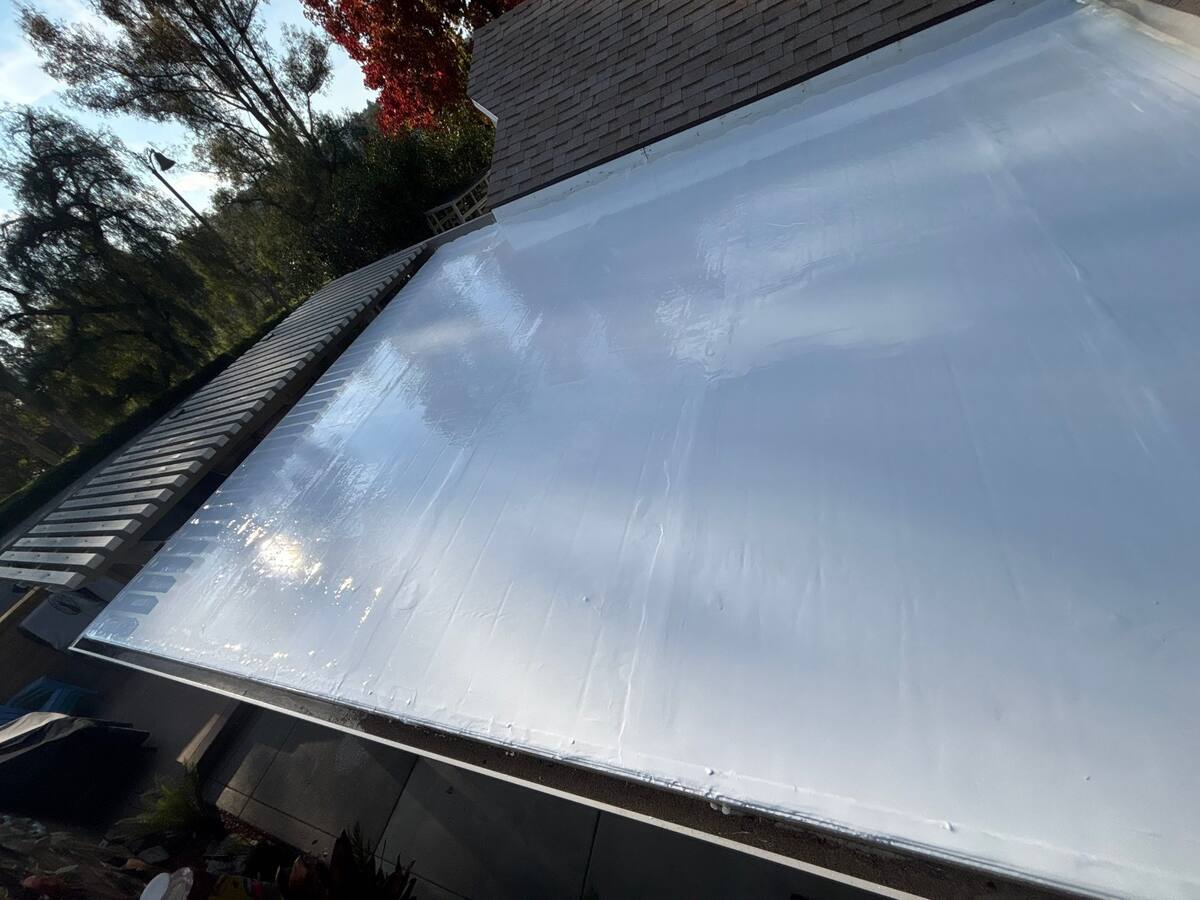
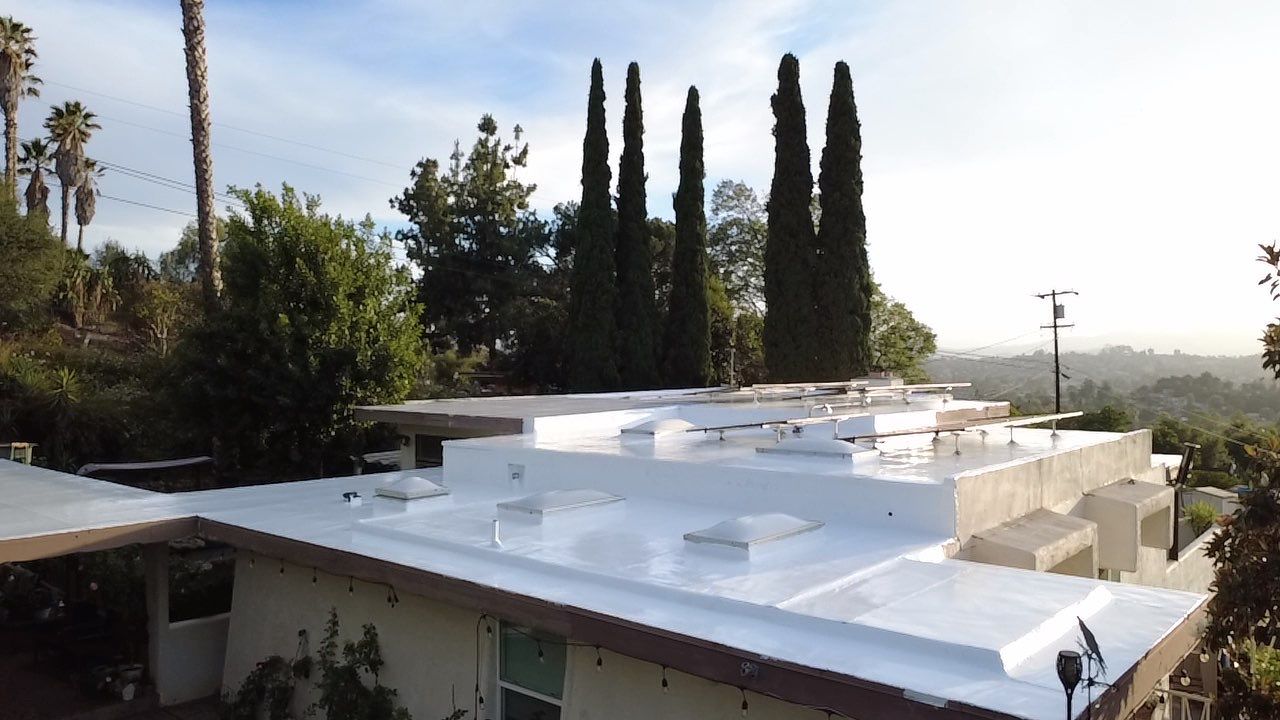
These photos show the kind of low-slope roofs we evaluate and restore—from patio and sunroom covers to larger roofs with solar and multiple roof planes.
Restore or re-roof?
Silicone is popular for patio covers and sunrooms, metal and aluminum coverings, and commercial roofs with pipes, solar equipment or many penetrations. It can reduce disruption and avoid the expense of a full tear-off when the existing roof is eligible.
We do not treat it as a shortcut. If the roof is wet, unsound or no longer a responsible restoration candidate, we will explain why and recommend the next best option.
Verified project work
Questions property owners ask
Silicone can be considered over many dry, sound and compatible low-slope systems, including certain metal, modified-bitumen, built-up and foam roofs. We inspect the existing roof before making a recommendation.
Pressure washing is preferred when site conditions allow because it gives the coating a cleaner surface. It creates more water and cleanup, so we also consider runoff, walls, landscaping and the property’s access before choosing the preparation approach.
We address the roof details that commonly need attention: lifting edges, nail holes, pipes, scuppers, corners, open laps, backouts and other transitions. Compatible caulking or silicone mastic is used as appropriate before the coating application.
Not every project needs the same coating build. Zenith often leans toward a 3-gallon-per-square system for a thicker, longer-lasting restoration when the roof and selected system call for it. The final recommendation follows the evaluation.
It can, when the roof is a good restoration candidate. A coating is not a solution for every roof; widespread moisture, a failed substrate or unsuitable conditions can make re-roofing the more responsible choice.
Tell us the roof type, age, known leaks, recent repairs and access considerations. Photos help us understand the roof before the visit.
We will evaluate the roof condition, details and restoration options before recommending a coating system.
A practical next step