Check the deck
We look for accessible signs of deck or substrate problems and make sure the roof can receive the system being considered.
Modified bitumen · torch-down roofing
We inspect the existing roof assembly, deck condition, layers, transitions and use of the space below before choosing the system. Then we build the modified-bitumen roof that fits the property—not a one-size-fits-all cap sheet.
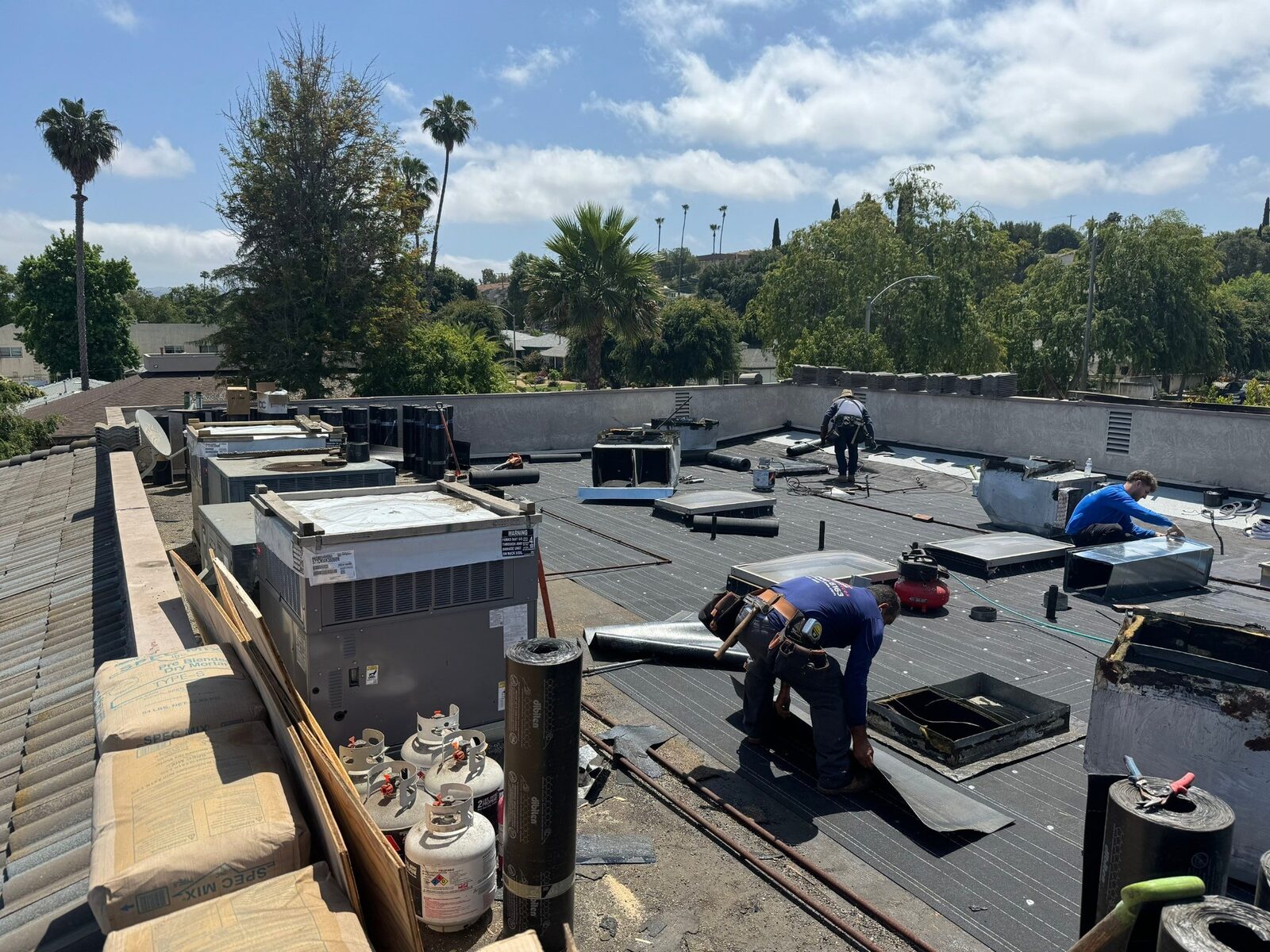
Before we spec the roof
Flat and low-slope roofs do not always have an accessible attic. When they do, we look from below. When access is tight or unavailable, a controlled roof core can help reveal the existing layers before removal begins.
We look for accessible signs of deck or substrate problems and make sure the roof can receive the system being considered.
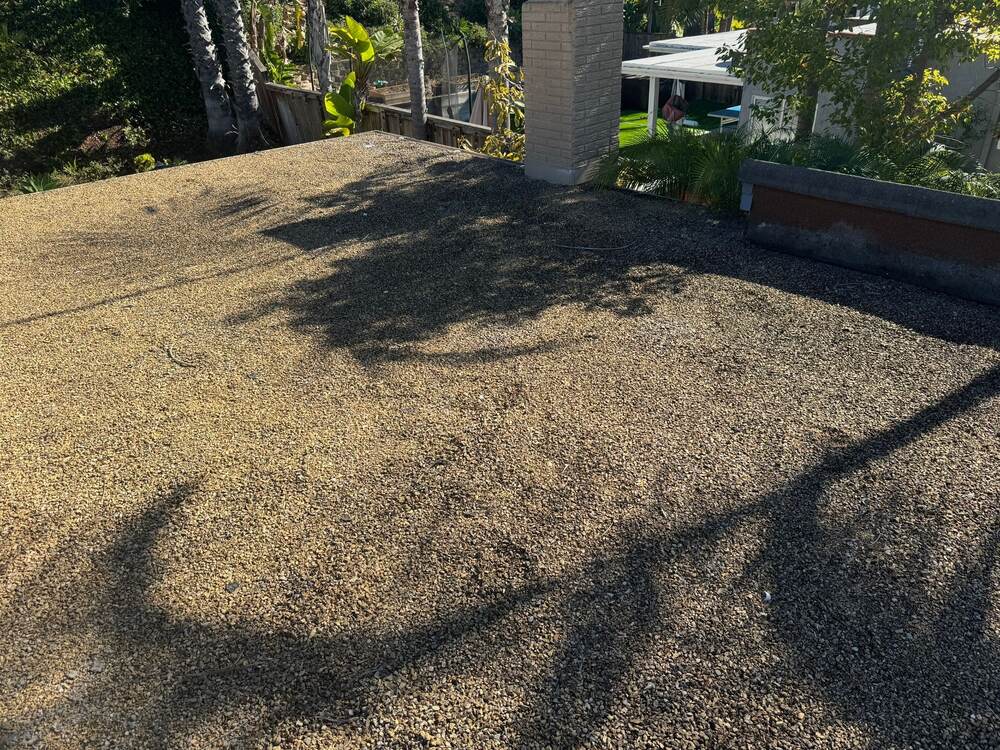
We determine whether we are sweeping off tar and gravel, removing an existing membrane, or opening a roof with several prior layers.
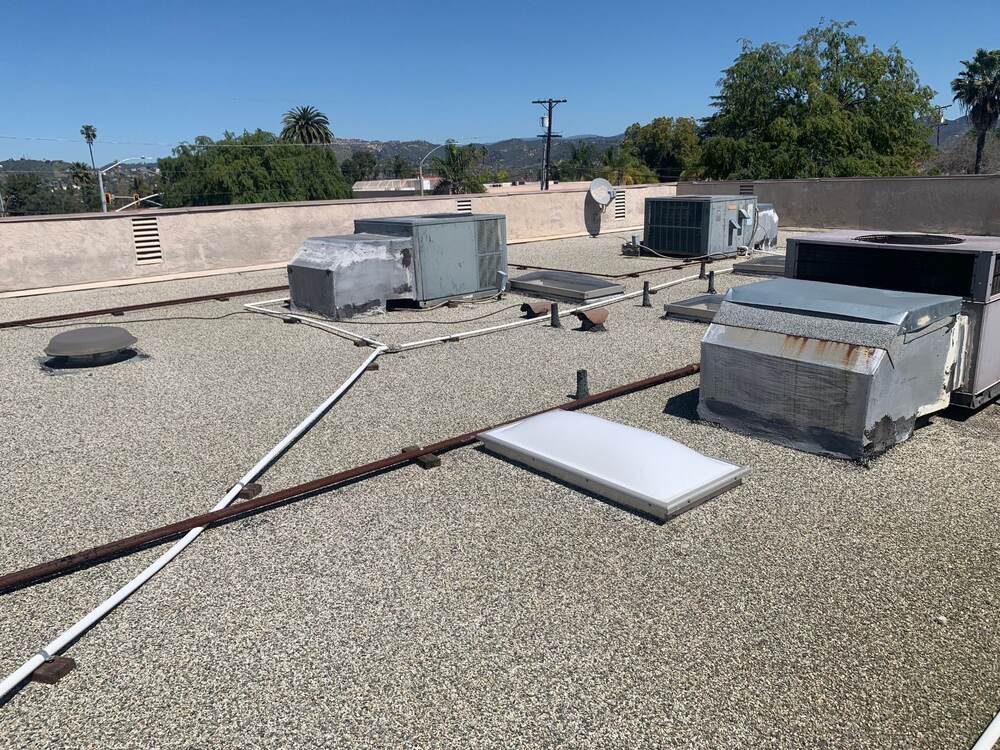
Walls, counterflashing, drains, equipment, pipes and clearance at transitions affect the installation method and sometimes the system choice.
One material, two very different assemblies
Patios & select non-livable areas
A lighter assembly can be appropriate for certain patio covers and similar areas when the roof, substrate and use below make it a responsible fit.
Typical expectation: about 10–12 years, depending on conditions, exposure and maintenance.
Livable space & stronger protection
For a roof protecting the property below, we generally recommend building the full two-ply assembly rather than relying on a single cap sheet alone.
Built for a longer service life—often 20+ years when the roof and installation conditions support it.
Service-life ranges are general guidance, not a promise or warranty. The actual roof assembly, drainage, exposure, maintenance and site conditions matter.
How Zenith builds it
Each roof has its own details, but this is the field process we follow when a full modified-bitumen installation is the right answer.
The things that decide whether it makes sense
Torch-down is a proven modified-bitumen method, but the surrounding property conditions matter just as much as the field membrane.
On roofs close to heavy trees or where site fire risk is a concern, we evaluate whether another compatible system is the better fit.
If counterflashing sits too close to the roof, it may need to be removed and rebuilt to create a proper transition—or the system choice may need to change.
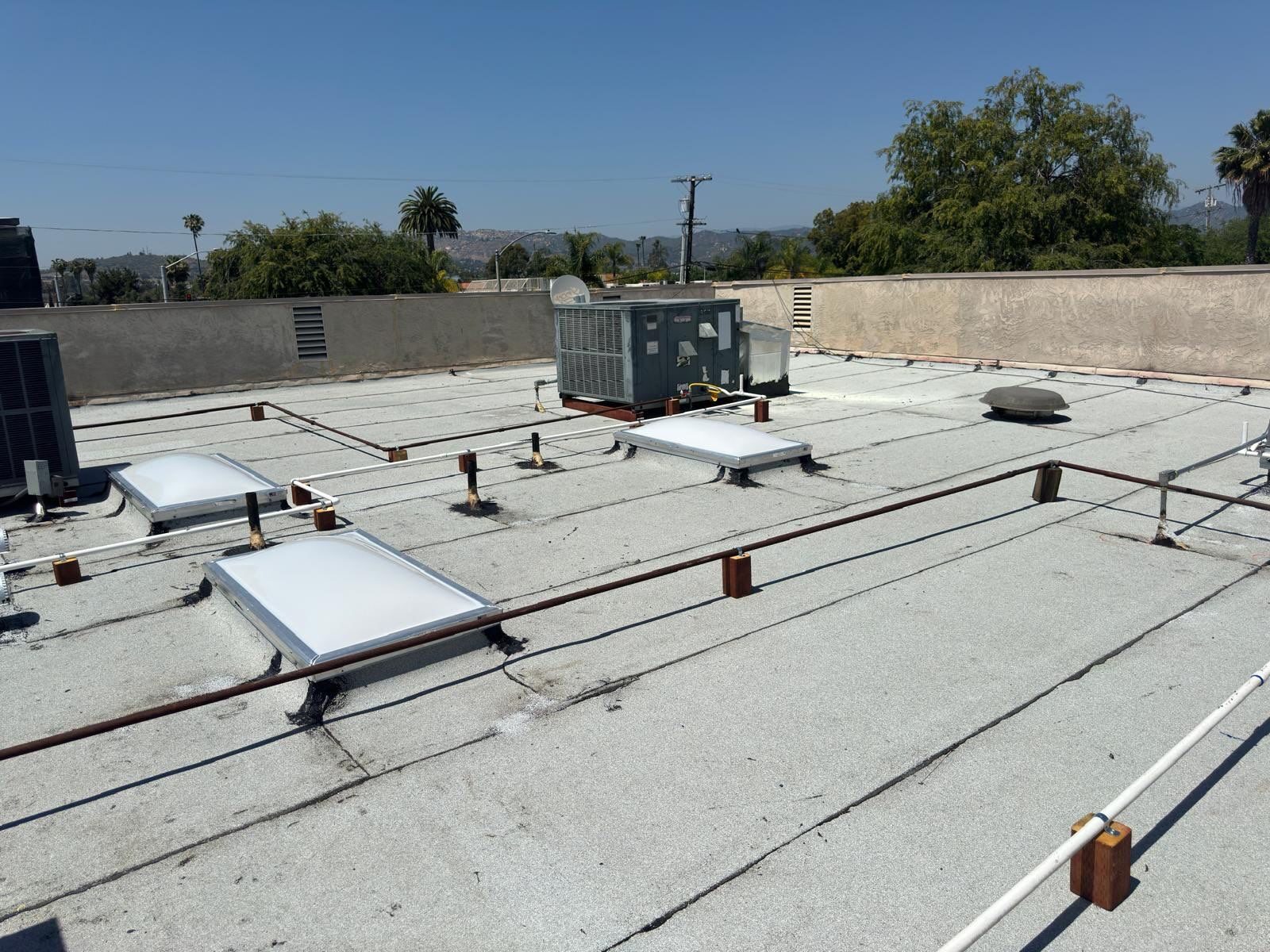
HVAC, skylights, conduit and service paths create penetrations and transition work that must be planned before membrane installation.
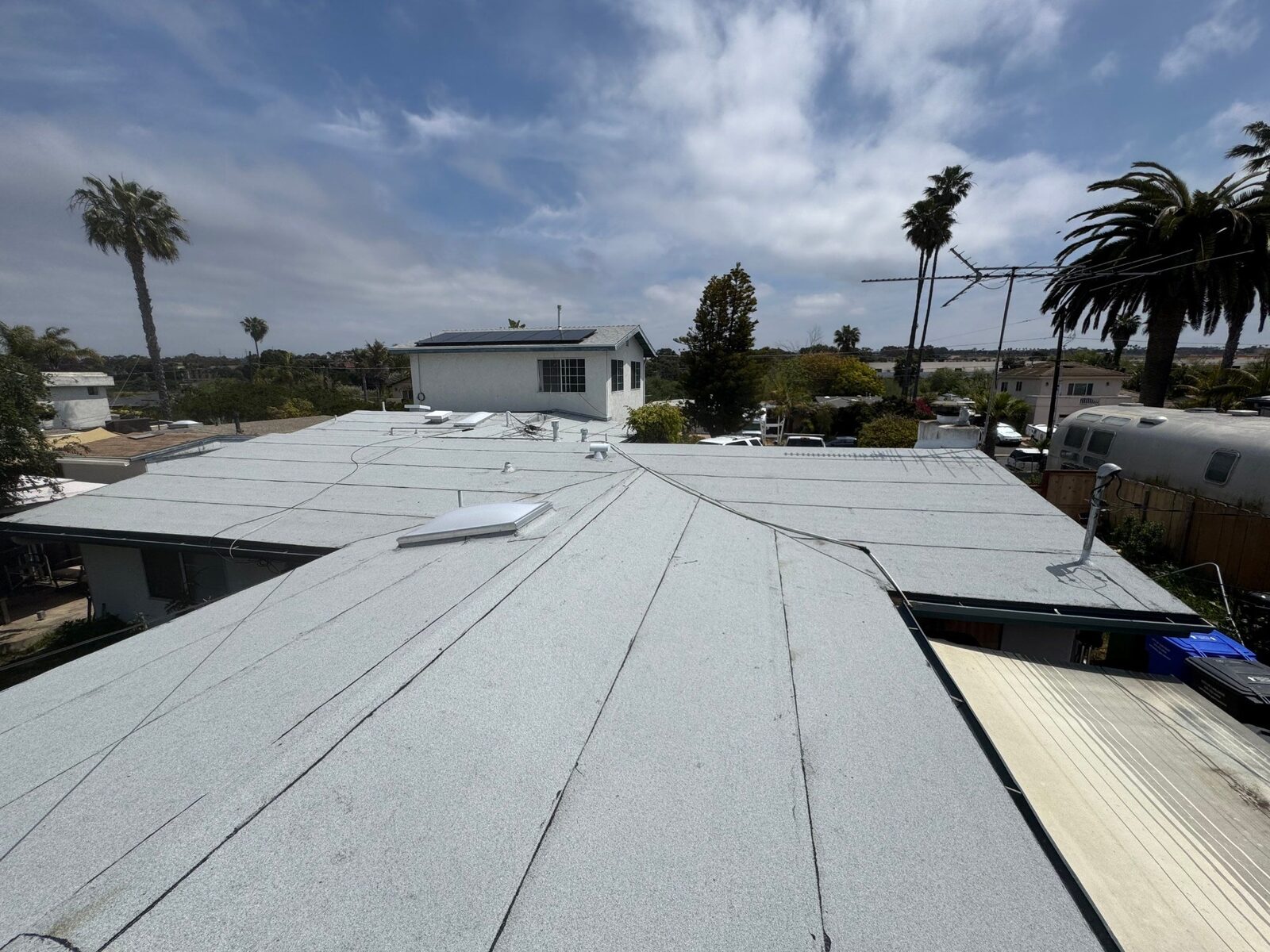
Real roof conditions
These are Zenith project photos—not stock images. They show why we inspect the assembly and details before deciding on the roofing approach.
Straight answers
The roof system should match the building and its details. Here is how we approach the most common questions.
Not always. A single cap system can make sense for a limited application such as a patio cover. For a roof over livable space or protecting the building below, we generally recommend the more robust two-ply approach.
The assembly typically begins with a fiberglass base sheet mechanically fastened with metal caps, then a smooth modified-bitumen ply, flashing work, primed metals and the final cap sheet. Exact details depend on the roof.
Primer helps the membrane properly adhere at metal edges, flashings and other transitions. Those details are common places for roof failures when they are not handled correctly.
Sometimes. Where existing counterflashing is too close to the roof surface, it may need to be removed and replaced or the roof may require another compatible approach that works better with the transition.
We evaluate the full site conditions. In some settings, another compatible roofing method may be the more responsible recommendation.
Verified project evidence
Share the roof type if known, how the space below is used, existing layers, access limits, equipment, trees or wall details. Photos help us prepare for the inspection.
Zenith Roofing Services evaluates low-slope roofs across San Diego County and Southwest Riverside County.